

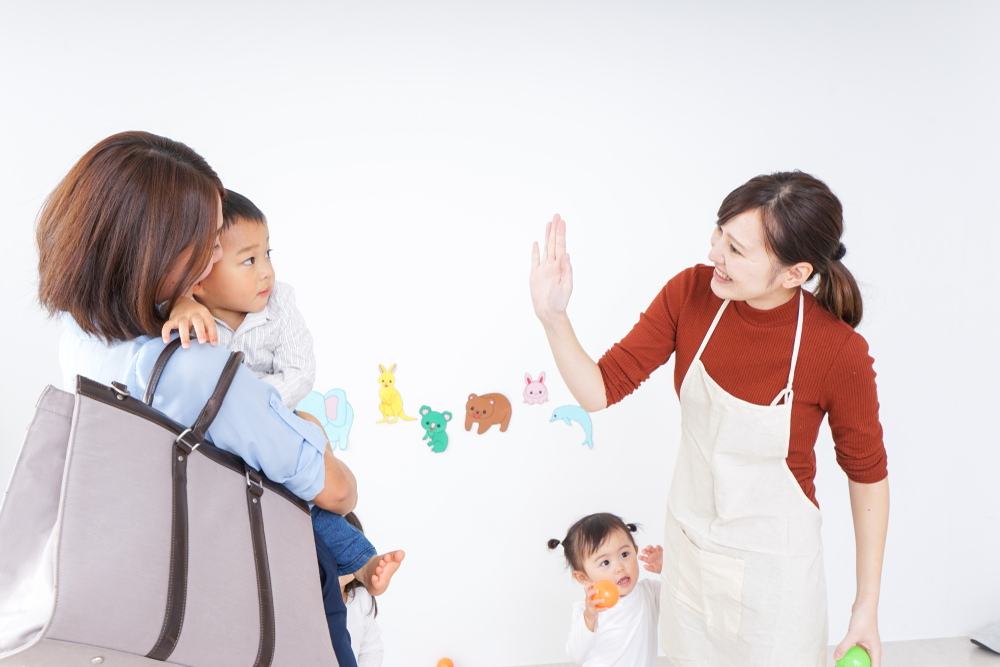
At Building Brilliance Day Care LIC, we understand that every child transitions at their own pace. Our educators create a safe, nurturing environment where children can build confidence, form relationships, and enjoy learning through play.
Understanding Separation Anxiety
Separation anxiety commonly affects infants, toddlers, and preschool-age children. It may become especially noticeable when a child begins daycare, moves into a new classroom, or experiences another change in routine.
Signs may include:
- Crying or clinging during drop-off
- Refusing to enter the classroom
- Becoming upset when a parent leaves
- Changes in sleep, appetite, or mood
These behaviors often improve as children become familiar with their teachers, classmates, and daily routine.
- Prepare Before the First Day
Helping your child become familiar with daycare beforehand can make the transition feel less overwhelming.
When possible, visit the center together, talk about what the classroom will be like, and show your child photos of the school or teachers. You can also read books about starting daycare and practice short separations with a trusted caregiver.
Begin following a consistent morning and bedtime routine before the first day. Knowing what to expect can help children feel more secure.
- Create a Consistent Goodbye Routine
Children thrive on predictability. A simple goodbye ritual helps your child know what to expect each morning.
Your routine might include:
- A hug and kiss
- A special handshake or high-five
- A reassuring phrase such as, “I love you. Have a wonderful day. I’ll be back after nap time.”
Keep goodbyes brief, loving, and positive. Lingering or returning after you have already said goodbye can make the transition more difficult.
- Talk About Daycare Positively
Before arriving, remind your child about activities they may enjoy, such as art, story time, music, outdoor play, or spending time with friends.
Use encouraging language without dismissing their feelings. You might say, “I know saying goodbye can feel hard, and your teachers will be there to help you.”
- Follow a Calm Morning Checklist
Rushed mornings can make an emotional transition more difficult. A simple checklist can help the family begin the day calmly.
Before leaving for daycare:
- Allow enough time to avoid rushing
- Make sure your child has eaten and is rested when possible
- Pack required supplies the night before
- Remind your child who will pick them up
- Share important updates with the teacher
- Leave calmly after saying goodbye
A predictable routine communicates that your child is safe and that you trust their teachers.
- Build Trust Through Consistency
Whenever possible, maintain regular drop-off and pick-up times. A predictable schedule helps children understand that their parent or caregiver always returns.
For younger children, connect your return to part of their routine rather than a clock time. For example, say, “I’ll be back after afternoon snack.”
- Encourage Independence at Home
Small opportunities for independence can help prepare your child for daycare. Encourage them to put away toys, wash their hands with supervision, choose between two outfits, help pack their backpack, or carry a small item into the classroom.
These everyday tasks build confidence and provide a sense of accomplishment.
- Bring an Approved Comfort Item
A familiar item may provide reassurance during the transition. Depending on the daycare’s policies, this could include a small blanket, stuffed animal, family photo, or another approved comfort object.
Ask your child’s teacher what items are permitted and when they may be used. Some classrooms limit personal belongings for safety, hygiene, or classroom-management reasons.
- Stay Calm and Confident
Children often take emotional cues from their parents. Even when saying goodbye is difficult, remaining calm and reassuring can help your child feel more secure.
You might say:
“I know it’s hard to say goodbye. You are safe with your teachers, and I’ll be back this afternoon.”
- Partner With Your Child’s Teachers
Open communication between families and teachers can make a meaningful difference during the adjustment period.
Share information about your child’s routines, comfort strategies, interests, and recent changes at home. Teachers can use familiar activities or reassurance to help your child settle into the day.
Many children who are upset during drop-off begin playing shortly after their parent leaves. Communication with the teaching team can provide reassurance and create consistency between home and daycare.
When Should Parents Seek Additional Support?
Some children adjust within a few days, while others may need several weeks. Temporary setbacks can also happen after illness, vacations, or changes at home.
Speak with your child’s teachers if the anxiety intensifies, prevents participation throughout the day, or affects eating, sleeping, or daily life at home. Your child’s pediatrician can also help if you have concerns about the intensity or duration of the behavior.
Remember That Progress Takes Time
Celebrate small victories, whether your child walks into the classroom independently, smiles at a teacher, joins an activity, or recovers more quickly after goodbye. These moments show that your child is building trust and confidence.
Building Brilliance Day Care LIC creates a welcoming environment where children feel safe, valued, and encouraged to learn and grow. By working together, families and teachers can help children develop a positive daycare routine and feel at home in their classroom.
Contact us to schedule a tour, meet our caring educators, and discover why so many Long Island City families trust us with their children’s early education.